Introduction: The Rise of Efficient AI
Artificial intelligence has spent the last few years following a simple-looking formula: bigger models, more data, more computing power, better capabilities. Large language models have demonstrated remarkable abilities in writing, coding, reasoning, translation, summarization, multimodal understanding, and autonomous task execution.
But a new research direction is challenging the idea that AI must always become larger.
Researchers and technology companies are increasingly investigating Small Language Models (SLMs)—compact AI models designed to deliver useful language capabilities with substantially lower computational, memory, energy, and deployment requirements.
The objective is not simply to create the smallest possible model. Instead, the emerging goal is to develop AI that provides the right amount of intelligence for a particular task while minimizing the resources required to deliver it.
Research published during 2025 and 2026 shows growing interest in deploying compact models directly on smartphones, laptops, industrial computers, IoT devices, robots, and other edge systems. A 2026 IEEE review describes SLMs as particularly relevant for low-power, memory-limited, and privacy-sensitive environments and highlights quantization, pruning, knowledge distillation, hardware-aware optimization, and adaptive model scaling as major research directions. (IEEE Xplore)
This shift could fundamentally change how AI is built and deployed.
Instead of every AI request traveling to a massive cloud model, future systems could increasingly divide workloads between small local models, medium-sized models, and large cloud models.
What Are Small Language Models? 🧠
There is no universally agreed parameter threshold that defines a Small Language Model.
In practical discussions, however, SLMs generally refer to language models that are sufficiently compact to operate efficiently on consumer hardware or edge devices. Recent research and industry discussions commonly consider models below roughly 10 billion parameters within the broader SLM category, with many practical deployments using models considerably smaller than that.
The important distinction is not only parameter count.
An SLM is generally designed or optimized around constraints such as:
- Lower memory consumption
- Faster inference
- Lower energy requirements
- Reduced hardware requirements
- Lower operating costs
- Local or offline execution
- Application-specific performance
- Privacy-sensitive processing
A model with fewer parameters can therefore be extremely useful when it is carefully trained for a specific purpose.
For example, an AI keyboard does not need the same capabilities as a scientific research assistant. A factory machine-monitoring system does not need a general-purpose conversational model capable of writing essays.
The best model is often the model that fits the task and environment, rather than simply the model with the greatest number of parameters.


Why Small Language Models Are Becoming Important ⚡
The expansion of generative AI has created enormous demand for computing infrastructure.
Large models can require powerful GPUs, substantial memory, high-bandwidth interconnects, and sophisticated serving infrastructure. When millions of users send requests simultaneously, the costs associated with inference become significant.
SLMs approach the problem from another direction.
Instead of asking:
“How can we make one enormous model answer everything?”
researchers are increasingly asking:
“Can we make smaller models capable enough to handle many tasks locally?”
This matters for several reasons.
1. Lower latency
When AI inference happens locally, information does not necessarily need to travel to a remote server and back.
This can reduce response delays, particularly for applications that require immediate interaction.
2. Greater privacy 🔐
Sensitive information can potentially remain on the device rather than being transmitted to a cloud service.
This can be especially relevant for personal assistants, healthcare applications, enterprise systems, and industrial environments.
3. Offline AI
A local model can continue functioning even when an internet connection is unavailable or unreliable.
This opens opportunities for AI in remote areas, transportation, fieldwork, emergency response, and developing regions.
4. Lower infrastructure costs
Organizations can potentially reduce dependence on expensive cloud inference for routine workloads.
5. Better scalability
Instead of sending every request to a centralized model, organizations can distribute computation across thousands or millions of local devices.
A 2026 IEEE review specifically identifies low latency, privacy preservation, and energy efficiency as important advantages of SLM-based edge AI. (IEEE Xplore)
The Research Shift From Giant Models to Efficient Models 🔬
The SLM movement does not mean that researchers have stopped developing large models.
Rather, AI research is becoming more diverse.
Researchers are exploring several complementary approaches:
Bigger models for broad capabilities.
Smaller models for efficient deployment.
Specialized models for particular domains.
Hybrid systems that combine models of different sizes.
Compression techniques that reduce the computational requirements of existing models.
This creates a more complicated but potentially more efficient AI ecosystem.
A 2025 ACL study examining more than 60 publicly available SLMs found that modern small models can be highly competitive on general tasks, while also identifying limitations in in-context learning and significant opportunities for optimization through task-specific routing, model-hardware co-design, and vocabulary/KV-cache compression. (ACL Anthology)
Quantization: Making AI Models Smaller 🔢
One of the most important techniques in efficient AI is quantization.
Neural-network parameters are normally represented using numerical formats such as FP32 or FP16. Quantization reduces the precision used to represent these values.
For example, instead of representing a parameter using 16 bits, an optimized model may use 8 bits or even 4 bits.
The potential benefits include:
- Smaller model files
- Lower memory consumption
- Reduced bandwidth requirements
- Faster inference on compatible hardware
- Lower energy consumption
Imagine a model with billions of parameters.
Reducing the representation from 16-bit values to approximately 4-bit values can dramatically reduce the memory required for model weights.
But quantization is not simply a matter of making every number smaller.
Researchers need to consider how precision reduction affects model accuracy, numerical stability, hardware compatibility, and actual inference performance.
Recent research on edge deployment demonstrates why this matters: techniques that look efficient at the model level do not always produce equivalent benefits once the model is executed on real hardware. (arXiv)
Knowledge Distillation: Learning From Bigger Models 🎓
Another major technique is knowledge distillation.
The idea is fascinating.
A large, powerful model acts as a teacher, while a smaller model becomes the student.
The teacher generates information that helps train the smaller model.
The student does not necessarily reproduce the entire internal structure of the teacher. Instead, training attempts to transfer useful behaviors, representations, predictions, or reasoning patterns.


This allows researchers to build a smaller model that can retain some capabilities of a much larger system.
Knowledge distillation is particularly interesting for specialized applications.
For instance, a powerful teacher model might generate thousands or millions of examples for a specialized task. A smaller student can then learn from those examples and operate more cheaply.
Recent research is also applying distillation to AI agents.
A 2026 ACL study called SmartAD investigated capacity-aligned agent distillation for transferring agentic capabilities into 1.5-billion- and 3-billion-parameter models. The work explored how carefully selected agent trajectories and weighted supervision can help smaller models learn complex tool-use and reasoning behavior. (ACL Anthology)
This is important because future AI agents could require many model calls for a single task. Reducing the cost of each call could make agentic systems substantially more practical.
Pruning: Removing What the Model Does Not Need ✂️
Another approach is pruning.
A neural network contains enormous numbers of parameters and connections. Some may contribute less to a particular workload.
Pruning attempts to remove unnecessary or less important components while preserving useful behavior.
There are different approaches to pruning, including:
- Unstructured pruning
- Structured pruning
- Weight pruning
- Neuron pruning
- Layer pruning
- Attention-head pruning
The challenge is that removing parameters does not automatically make a model faster.
The hardware and software must be capable of exploiting the resulting sparsity.
This is one reason modern efficient-AI research increasingly emphasizes hardware-aware optimization rather than treating model compression as an isolated problem.
A 2026 empirical study of edge deployment found that the best compression strategy can vary according to both the task and hardware. In its experiments, quantization and pruning behaved differently for language and vision workloads, demonstrating that compression results cannot automatically be generalized from one deployment scenario to another. (arXiv)
The Importance of Hardware-Software Co-Design 💻
AI efficiency is no longer only a model-design problem.
It is increasingly a systems problem.
A model may have fewer parameters but still run slowly if its operations are poorly matched to the processor.
Modern edge devices can contain:
- CPUs
- GPUs
- Neural Processing Units
- AI accelerators
- Specialized memory systems
- Digital signal processors
Efficient AI therefore requires coordination between the model and the hardware.
Recent research on edge accelerators highlights the importance of memory access patterns and the memory-bound nature of autoregressive decoding. (Hugging Face)
This explains why two devices with similar theoretical computing capabilities can sometimes produce very different real-world AI performance.
Small Language Models and Smartphones 📱
Smartphones could become one of the most important platforms for SLM deployment.
Modern phones already contain increasingly capable processors and NPUs designed for machine-learning workloads.
A compact language model could potentially support:
- Smart text completion
- Email assistance
- Translation
- Voice commands
- Document summarization
- Personal search
- Photo organization
- Accessibility features
- Offline assistants
- Local chatbot functions


Research is already demonstrating increasingly sophisticated multimodal models running on mobile hardware.
For example, a Nature Communications study on MiniCPM-V reported an efficient multimodal model designed for edge deployment and demonstrated how advances in model architecture, training, and hardware optimization can bring sophisticated vision-language capabilities to mobile devices. (Nature)
Google has also expanded its AI Edge ecosystem to support on-device SLMs, multimodality, retrieval-augmented generation, and function calling. Its 2025 announcement described support for more than a dozen models and introduced Gemma 3n as a multimodal on-device model capable of handling text, image, video, and audio inputs. (Google Developers Blog)
AI That Works Without the Internet 🌐➡️📱
One of the most interesting consequences of SLM research is the possibility of offline AI.
Cloud AI depends on network connectivity.
But connectivity can be:
- Slow
- Expensive
- Intermittent
- Unavailable
- Restricted for privacy reasons
A compact model running directly on a device can potentially operate without an active internet connection.
This could be useful in:
Rural healthcare
Healthcare workers could potentially access AI-assisted information in locations with unreliable connectivity.
Education
Students could use AI-powered learning tools without continuous internet access.
Transportation
Vehicles could process certain commands locally.
Manufacturing
Industrial systems could analyze equipment information without constantly sending sensitive operational data to external servers.
Emergency services
AI tools could continue functioning when communication infrastructure is damaged.
The recent emergence of offline translation models also illustrates this direction. In September 2026, TechRadar reported on compact translation models designed to run directly on phones and laptops without an internet connection. (TechRadar)
Small Models and Artificial Intelligence Agents 🤖
AI agents are another major research area.
An AI agent may need to:
- Understand a request.
- Plan a sequence of actions.
- Select tools.
- Call APIs.
- Read results.
- Correct mistakes.
- Continue until the task is complete.
If a large model handles every step, costs can quickly increase.
SLMs offer a possible alternative.
A small model could handle routine operations while a larger model is used only when necessary.
For example:
User request → Small model → Tool selection → Small model → Routine execution
If a difficult reasoning problem appears:
Small model → Large model → Small model → Final action
This creates a hierarchical AI architecture.
The system does not need to use its most computationally expensive model for every task.
Research into SLMs for agentic tasks has already explored supervised fine-tuning, parameter-efficient fine-tuning, reinforcement learning, direct preference optimization, and hybrid approaches. One 2025 study found that medium-sized models in the 1–3 billion parameter range could outperform ultra-compact models below 1 billion parameters on the evaluated function-calling tasks. (arXiv)
That result highlights an important point:
Smaller is not always better.
The optimal model depends on the job.
The Energy Efficiency Question 🔋
AI’s energy consumption has become an important research topic.
It is tempting to assume that a smaller model automatically uses less energy.
But real-world energy consumption depends on many factors:
- Model architecture
- Hardware
- Memory bandwidth
- Quantization
- Batch size
- Context length
- Number of generated tokens
- Runtime implementation
- CPU/GPU/NPU utilization
Research examining SLMs on devices including Raspberry Pi 5, Jetson Nano, and Jetson Orin Nano found meaningful differences in energy-to-performance efficiency depending on the model and hardware configuration. The study reported that GPU acceleration on the Jetson Orin Nano offered particularly strong energy-performance characteristics, while different models made different trade-offs between accuracy and power consumption. (arXiv)
This means that efficient AI should be measured using more than parameter count.
A better question is:
How much useful work can the system perform for each unit of energy?
The KV Cache Problem 🧮
Another important area of research involves the KV cache.
When a language model generates text, it stores information about previously processed tokens to avoid repeating certain calculations.
This stored information is called the key-value cache, or KV cache.
As context windows become longer, KV-cache requirements can become substantial.
This is particularly challenging for edge devices with limited memory.
Researchers are therefore exploring:
- KV-cache quantization
- KV-cache compression
- Cache eviction
- Context management
- Memory-aware inference
- Efficient attention mechanisms
The 2025 ACL research on SLMs specifically identified KV-cache compression as one of the opportunities for improving edge efficiency. (ACL Anthology)
The implication is significant: efficient AI requires optimizing not only model parameters but also how information is stored and moved during inference.
Specialized Small Models 🎯
One of the strongest arguments for SLMs is specialization.
Imagine two models.
Model A is trained to answer almost any question.
Model B is trained specifically to analyze manufacturing maintenance logs.
Model A may have far more parameters.
But Model B could be much more efficient for the specific manufacturing application.
This creates opportunities for specialized SLMs in:
Healthcare 🏥
Models could be optimized for clinical terminology, medical documentation, patient communication, or administrative workflows.
Finance 💰
Compact models could classify financial documents, analyze structured reports, or assist with routine compliance workflows.
Education 🎓
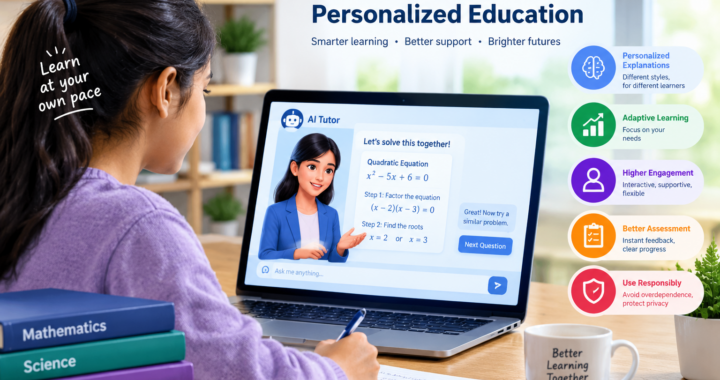
SLMs could provide localized tutoring, language learning, summarization, and question-answering capabilities.
Manufacturing 🏭
Models could interpret machine logs, maintenance instructions, and production data.
Retail 🛒
Compact AI could power recommendation, customer-support, inventory, and product-search applications.
Cybersecurity 🔐
Specialized models could analyze logs and classify security events.
The key advantage is that specialization can reduce the amount of general-purpose knowledge the model needs to represent.
Small Models and Multimodal AI 👁️🎤
The future of SLMs will not be limited to text.
Researchers are increasingly developing compact multimodal systems capable of processing combinations of:
- Text
- Images
- Audio
- Video
This is especially important for edge devices.
A smartphone assistant could understand a spoken question and examine an image without sending everything to the cloud.
A factory robot could interpret visual information and language commands locally.
A wearable device could combine speech and contextual information.
Google’s AI Edge work demonstrates this direction, with Gemma 3n designed as a multimodal on-device model supporting text, images, video, and audio. (Google Developers Blog)
AI at the Edge: From Cloud Computing to Local Intelligence 🌍
The traditional AI architecture has often looked like this:
User → Internet → Cloud AI → Internet → User
The emerging edge-AI architecture can look more like:
User → Local AI → Immediate response
Or:
User → Local AI → Cloud AI only when necessary


This hybrid architecture could become particularly important.
Simple tasks could remain local.
Complex tasks could be sent to powerful cloud models.
The local device could then receive the result and continue processing privately.
This creates a dynamic AI computing model in which computation is allocated according to the difficulty and sensitivity of the task.
The Challenge: Smaller Models Still Have Limits 🚧
Despite rapid progress, SLMs are not a universal replacement for large models.
Complex reasoning
Large models can retain advantages on difficult multi-step reasoning problems.
Broad knowledge
A compact model may have less capacity to represent a huge range of knowledge.
Long contexts
Long-context applications can increase memory requirements.
Hallucinations
Reducing model size does not eliminate incorrect information.
Specialized hardware
A model optimized for one processor may not perform similarly on another.
Compression quality
Aggressive compression can reduce accuracy or robustness.
The research therefore points toward optimization rather than blind model reduction.
The 2026 edge-deployment study found that no single compression technique consistently wins across tasks and hardware platforms. (arXiv)
A New AI Formula: Intelligence Per Watt ⚡
For years, AI progress was frequently discussed using model size and benchmark scores.
The future may increasingly emphasize a different measurement:
Intelligence per watt
or:
Useful performance per dollar
or:
Capability per gigabyte
or:
Quality per millisecond
These measurements better reflect real-world deployment.
Consider an AI system that is 10% more accurate but requires 20 times more computing resources.
For some applications, that trade-off may be worthwhile.
For others, it may not be.
An autonomous device operating on a battery may prioritize energy efficiency.
A cloud research assistant may prioritize maximum reasoning capability.
A medical device may prioritize accuracy and reliability.
A smartphone assistant may prioritize privacy and latency.
Therefore, there is unlikely to be one universally optimal model.
The Future of AI May Be a Family of Models 👨👩👧👦
Instead of one model doing everything, future AI systems could consist of multiple models.
For example:
Tiny model: wake-word detection and simple commands.
Small model: everyday language tasks.
Medium model: complex local reasoning.
Large model: advanced reasoning and difficult tasks.
Specialized model: domain-specific operations.
This could resemble the way computer processors already distribute workloads across different components.
The result could be a much more efficient AI ecosystem.
What This Means for Businesses 🏢
Businesses adopting AI will increasingly need to evaluate more than model quality.
They may need to consider:
Cost: How expensive is every inference?
Privacy: Does sensitive data need to leave the organization?
Latency: How quickly does the system need to respond?
Connectivity: Can the system function offline?
Hardware: What devices are available?
Energy: Is the system battery-powered?
Scalability: How many AI requests must be handled?
A small specialized model could make economic sense when millions of repetitive operations need to be performed.
Instead of sending every task to an expensive general-purpose model, companies could deploy lightweight models for routine operations.
What This Means for Consumers 📱
For everyday users, efficient AI could become almost invisible.
AI may increasingly operate in the background of devices.
Your smartphone might summarize a document locally.
Your laptop might organize files without uploading them.
Your earbuds might translate conversations locally.
Your camera might describe objects without a cloud connection.
Your vehicle might process voice commands without sending every conversation to a server.
The most important change may therefore not be a new chatbot.
It may be the gradual integration of small AI models into ordinary computing devices.
New Research Direction: Dynamic Model Routing 🔀
Another promising direction is dynamic routing.
Instead of deciding in advance that every request should use the same model, an AI system can determine which model is appropriate for each request.
For example:
Simple request → Tiny SLM
Moderate request → Medium SLM
Complex request → Large LLM
This could dramatically reduce unnecessary computation.
Research on SLM deployment has identified task-specific routing as an important optimization opportunity. (ACL Anthology)
Dynamic routing could eventually become one of the foundations of efficient AI infrastructure.
The Role of Retrieval-Augmented Generation 📚
Small models can also be combined with Retrieval-Augmented Generation (RAG).
Instead of forcing a model to memorize everything, the system can retrieve relevant information from an external knowledge source.
The architecture becomes:
User question → Retrieve information → Small model → Answer
This can allow a relatively compact model to work with large collections of documents.
For businesses, this could mean that an SLM does not need to contain every piece of company knowledge internally.
Google’s AI Edge ecosystem has already explored combining on-device SLMs with RAG and function calling. (Google Developers Blog)
This is a powerful concept because it separates:
Reasoning capability
from
Information storage
Small Language Models and Robotics 🤖
Robotics may become another major beneficiary.
Robots operate in physical environments where latency matters.
A robot that must wait for every decision to travel to a cloud server may face communication delays or connectivity problems.
A local SLM could potentially help with:
- Natural-language commands
- Task interpretation
- Object descriptions
- Tool selection
- Simple planning
- Human-robot interaction
A larger cloud model could still be used for difficult planning tasks.
This creates a hybrid architecture in which local AI handles immediate interactions while cloud AI provides additional intelligence when necessary.
Efficient AI and Sustainability 🌱
AI efficiency also has an environmental dimension.
Reducing computational requirements can potentially reduce:
- Electricity consumption
- Hardware requirements
- Cooling requirements
- Data-center workloads
- Network traffic
However, efficiency claims must account for the complete lifecycle of AI.
Training a compact model through distillation may itself require a large teacher model and substantial computation.
Therefore, researchers increasingly need to consider:
Training energy + compression energy + deployment energy + inference energy
rather than looking only at the final model.
This lifecycle perspective will become increasingly important as AI systems are deployed at massive scale.
The Biggest Research Question: How Small Can AI Become? 🔬
The answer is unlikely to be a single number.
A model can become smaller until it loses capabilities that are important for its intended application.
The better question is:
How small can a model become while retaining the capabilities required by a particular task?
For a text classifier, the answer may be extremely small.
For a personal assistant, a somewhat larger model may be necessary.
For complex scientific reasoning, substantially larger models may still be valuable.
This means the future will likely involve task-specific efficiency targets rather than one universal definition of the ideal SLM.
The Future of Small Language Models in 2026 and Beyond 🚀
The current research trajectory points toward several major developments.
1. More capable sub-billion models
Researchers will continue improving models that operate with very limited memory.
2. Better 1B–4B models
This range could become especially important for smartphones, laptops, and edge computers.
3. More multimodal SLMs
Text, vision, audio, and video capabilities will increasingly move onto local devices.
4. Smarter model routing
AI systems will automatically choose the smallest model capable of handling a task.
5. Hardware-aware AI
Model architecture and processor design will increasingly be developed together.
6. More offline AI
Translation, assistants, search, education, and accessibility tools could increasingly operate without permanent connectivity.
7. Specialized enterprise models
Companies may build small models optimized around their own data and workflows.
8. Efficient AI agents
Compact models could handle routine tool calls while larger models are reserved for difficult reasoning.
9. Better compression
Quantization, pruning, distillation, and sparsity techniques will continue improving.
10. Hybrid AI ecosystems
Large cloud models and small local models will increasingly cooperate rather than compete.
Conclusion: Smaller AI Could Become the Smarter Strategy 🧠⚡
The development of Small Language Models represents an important change in the direction of artificial intelligence.
For years, the dominant narrative was that AI capabilities would primarily advance through increasingly large models. The latest research suggests a more nuanced future.
Efficiency is becoming a capability of its own.
A model that can run locally, respond quickly, protect sensitive data, consume less energy, and perform a specialized task accurately can be more useful in a real-world application than a much larger model that requires a powerful cloud infrastructure.
Recent research has demonstrated that SLMs can operate across smartphones, Raspberry Pi-class computers, edge accelerators, and other resource-constrained platforms. Researchers are simultaneously improving quantization, distillation, pruning, routing, multimodal capabilities, retrieval, function calling, and hardware-software co-design. (IEEE Xplore)
The future therefore may not be about choosing between small AI and large AI.
It may be about creating intelligent systems where each model performs the job for which it is most appropriate.
A tiny model could handle a simple request.
A small model could manage an everyday task.
A medium model could perform more sophisticated reasoning.
A large model could solve exceptionally difficult problems.
Together, these systems could create AI that is faster, more private, more affordable, more energy-conscious, and more widely accessible.
The next major AI revolution may therefore not happen only inside enormous data centers.
It may happen inside phones, laptops, cars, robots, factories, cameras, medical devices, and billions of other everyday machines. 📱🤖🌍
🔎 Key Takeaways
Small Language Models are becoming an important research direction for efficient AI.
Quantization can significantly reduce model memory requirements.
Knowledge distillation can transfer useful capabilities from larger models to smaller ones.
Pruning can reduce model complexity, although its real-world benefit depends on hardware and workload.
On-device AI can improve latency, privacy, and offline availability.
SLMs are increasingly being explored for multimodal applications and AI agents.
Hardware-software co-design is becoming essential for practical edge AI.
No single compression technique is optimal for every model, task, or device.
The future is likely to combine small local models with larger cloud models.
Efficient AI could ultimately make advanced intelligence available across a much wider range of devices. 🚀