Artificial intelligence has moved from being a futuristic concept to becoming one of the most influential technologies shaping the modern world. From automated customer support and personalized recommendations to advanced data analysis and intelligent business applications, AI is changing the way people work, communicate, create, and make decisions. 🌐🧠
At the center of this transformation are AI services. These services provide businesses, organizations, developers, and individuals with access to artificial intelligence capabilities without requiring everyone to build sophisticated AI systems from the ground up.
AI services can include machine learning development, natural language processing, computer vision, predictive analytics, intelligent automation, generative AI, conversational assistants, recommendation systems, and many other applications. Together, these technologies create opportunities to improve productivity, understand information, automate repetitive processes, and develop innovative digital experiences.
As organizations continue their digital transformation journeys, understanding AI services has become increasingly important. The following guide explores what AI services are, how they work, where they are used, their benefits and challenges, and what the future may hold. 🔍✨
Understanding the Meaning of AI Services 🧠
AI services are technology solutions that use artificial intelligence to perform tasks that traditionally require human intelligence. These tasks can involve recognizing patterns, understanding language, analyzing information, making predictions, generating content, or responding to users.
Instead of requiring an organization to create every component independently, AI services can provide ready-to-use capabilities through software platforms, application programming interfaces, cloud infrastructure, consulting solutions, or customized applications.
For example, a company may use an AI service to analyze thousands of customer messages and identify common complaints. Another organization could use computer vision to inspect products on a manufacturing line. A marketing team might use generative AI to brainstorm content ideas, while a software development team could use AI-assisted tools to improve coding workflows. 💻⚙️
The flexibility of AI services is one reason they have become so important. Different organizations can apply similar underlying technologies to completely different business problems.
AI services may be delivered through cloud platforms, enterprise software, specialized applications, consulting companies, or internally developed systems. The right solution depends on the organization’s goals, available data, technical infrastructure, budget, and regulatory requirements.
Major Types of AI Services 🔬
The AI services landscape is broad, with different technologies designed to solve different problems.
Machine Learning Services
Machine learning allows computer systems to learn patterns from data and improve their performance without being explicitly programmed for every individual situation.
Businesses can use machine learning services for forecasting, classification, fraud detection, customer segmentation, demand prediction, and risk assessment.
For example, an online retailer could analyze purchasing behavior to estimate which products customers are likely to buy next. A financial organization could analyze transaction patterns to identify unusual activity.
Natural Language Processing
Natural language processing, or NLP, focuses on enabling computers to understand and work with human language. 🗣️💬
NLP-powered AI services can support chatbots, sentiment analysis, document processing, translation, summarization, search systems, and voice-based applications.
Organizations that receive large volumes of emails, messages, reviews, or documents can use NLP to process information more efficiently.
Computer Vision
Computer vision enables machines to interpret visual information from images and videos. 📷👁️
Applications include object detection, image classification, quality inspection, document recognition, medical image analysis, security systems, and retail analytics.
Manufacturers, healthcare organizations, logistics companies, and many other industries can benefit from computer vision when visual information plays an important role in their operations.
Generative AI
Generative AI has become one of the most visible areas of artificial intelligence. It can generate text, images, audio, software code, and other forms of content based on user instructions or contextual information.
Businesses can use generative AI services for brainstorming, content creation, document summarization, software development assistance, knowledge management, and customer interactions. ✍️🤖
However, generated content still requires appropriate human review, especially when accuracy, privacy, intellectual property, or compliance matters.
Predictive Analytics
Predictive AI services use historical and current data to estimate possible future outcomes.
Companies can apply predictive analytics to demand forecasting, equipment maintenance, customer behavior, financial planning, supply chains, and operational risk.
The goal is not to predict the future with certainty but to identify patterns that can help people make better-informed decisions.
How AI Services Support Business Automation ⚙️🚀
One of the strongest reasons organizations adopt AI services is automation.
Many business processes involve repetitive tasks such as sorting documents, responding to frequently asked questions, extracting information from forms, organizing data, or generating routine reports.
AI can assist with these processes and allow employees to spend more time on tasks requiring creativity, judgment, communication, and strategic thinking.
For example, an AI-powered customer service system can categorize incoming questions and provide responses to common requests. More complicated cases can then be transferred to human representatives.
In finance departments, AI can help organize invoices and identify unusual transactions. In human resources, AI systems can assist with administrative workflows. In logistics, intelligent systems can support route planning and demand forecasting. 📊
Automation does not necessarily mean eliminating human involvement. In many successful implementations, AI acts as a supporting layer that helps people complete their work faster and more consistently.
AI Services in Customer Experience 💬✨
Customer expectations have changed significantly in the digital age. People often expect quick responses, convenient interfaces, personalized recommendations, and continuous access to information.
AI services can help businesses meet these expectations.
AI-powered chatbots and virtual assistants can answer common questions, guide customers through processes, and provide information at different times of the day.
Recommendation engines can analyze user behavior and suggest products, articles, videos, music, or services that may be relevant to individual interests.
Sentiment analysis can help organizations understand how customers feel about products or experiences by analyzing reviews, messages, and other forms of feedback.
When implemented responsibly, these capabilities can make digital experiences more responsive and personalized. 🌟
At the same time, businesses should avoid excessive automation when customers genuinely need human support. A well-designed AI strategy combines automation with accessible human assistance.
AI Services for Data Analysis and Decision-Making 📈🧠
Modern organizations generate enormous amounts of data. Sales records, website interactions, customer feedback, operational information, sensor readings, and financial data can all contain valuable insights.
The challenge is turning this information into something useful.
AI services can help organizations identify patterns within large datasets that may be difficult to discover manually.
For example, an organization might analyze customer behavior to identify factors associated with customer retention. A manufacturer could study equipment data to identify warning signs before a machine fails.
AI-powered analytics can also help decision-makers explore different scenarios and identify trends.
However, AI should generally be viewed as a decision-support technology rather than an unquestionable authority. Data quality, model assumptions, changing conditions, and unexpected events can all affect AI-generated recommendations.
Combining AI analysis with human expertise can provide a stronger approach to complex decision-making. 🔎
AI Services Across Different Industries 🌍
AI services are not limited to technology companies. They are being explored across a wide range of industries.
Healthcare
Healthcare organizations can use AI for administrative automation, medical research, image analysis, patient communication, and data processing.
AI can help researchers identify patterns across large datasets and assist professionals with information-intensive workflows.
Because healthcare involves highly sensitive information and significant consequences, privacy, safety, validation, and professional oversight are especially important. 🏥🧬
Finance
Financial organizations use AI for areas such as fraud detection, risk analysis, customer support, document processing, and market research.
AI can process large volumes of financial information quickly, helping analysts and organizations identify unusual patterns.
Retail
Retailers can use AI for product recommendations, inventory forecasting, customer segmentation, pricing analysis, demand prediction, and conversational shopping experiences. 🛍️🤖
Manufacturing
Manufacturers can apply AI to quality control, predictive maintenance, robotics, production optimization, and supply chain management.
Computer vision can inspect products for potential defects, while predictive systems can analyze equipment data to identify maintenance needs.
Education
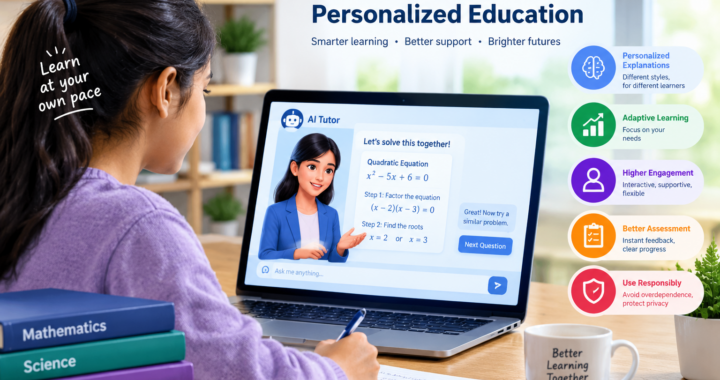
Educational organizations can explore AI services for personalized learning, administrative support, content generation, language assistance, and learning analytics. 🎓📚
AI can provide additional learning support, but educators remain important for context, mentorship, assessment, and human connection.
Transportation and Logistics
AI services can help organizations analyze transportation networks, estimate demand, optimize routes, and coordinate logistics operations.
As connected devices and sensors produce more information, AI can help transform that data into operational insights.
Benefits of Adopting AI Services 🌟
Organizations can experience several potential advantages when AI services are implemented thoughtfully.
Improved Efficiency
AI can process large volumes of information rapidly and automate repetitive workflows, helping teams use their time more effectively.
Greater Scalability
Digital AI systems can handle growing volumes of requests without requiring every task to be performed manually.
Faster Analysis
AI can process complex datasets and highlight patterns that may deserve further investigation.
Personalized Experiences
AI can help businesses tailor recommendations, communications, and interfaces to different users.
Innovation
AI services can make it easier to experiment with new products, applications, and business models.
Better Resource Allocation
When routine activities are automated, employees can focus more attention on strategic, creative, and relationship-oriented work. 💡
These benefits are not automatic, however. Successful AI implementation depends on selecting appropriate use cases, maintaining high-quality data, monitoring performance, and involving people throughout the process.
The Importance of AI Data and Infrastructure 🗄️☁️
AI systems depend heavily on data and infrastructure.
Data provides the information from which many AI systems learn or make predictions. If data is incomplete, outdated, inconsistent, or biased, the resulting system may produce unreliable outcomes.
Organizations therefore need strong data management practices.
This can include data governance, access controls, quality monitoring, documentation, security measures, and responsible data handling.
Infrastructure is also important. AI workloads may require computing resources, storage, specialized processors, networking capabilities, and monitoring systems.
Cloud computing has made many AI capabilities more accessible by allowing organizations to use scalable infrastructure instead of building every component themselves.
However, organizations should still evaluate costs, performance requirements, privacy obligations, vendor dependencies, and long-term sustainability before selecting an AI infrastructure strategy. ☁️🔐
AI Security, Privacy, and Responsible Use 🔐🤝
The growth of AI services also introduces important responsibilities.
AI systems may process confidential business information, customer data, intellectual property, or other sensitive material. Organizations must therefore consider how information is collected, stored, accessed, and processed.
Security measures can include authentication, authorization, encryption, monitoring, secure development practices, and regular system evaluation.
Privacy is another important consideration. Organizations should understand what information an AI system receives and ensure that its use aligns with applicable policies and legal requirements.
Responsible AI also involves addressing issues such as bias, explainability, accuracy, accountability, and human oversight.
A powerful AI system is not necessarily a trustworthy AI system. Trust requires careful design, testing, governance, transparency, and continuous monitoring. 🛡️
AI Services and the Future of Work 👩💻🤖
One of the most discussed questions surrounding AI is how it will affect employment.
AI is likely to change many job tasks rather than affecting every profession in exactly the same way.
Some repetitive activities may become increasingly automated, while new responsibilities may emerge around AI supervision, system design, data management, governance, and human-AI collaboration.
Workers may increasingly use AI as a productivity tool.
For example, a writer might use AI to brainstorm ideas and organize research. A programmer could use AI-assisted development tools. An analyst might use AI to explore large datasets. A customer service employee could use AI to summarize previous interactions before speaking with a customer.
The most valuable skill may therefore become the ability to work effectively alongside intelligent systems.
Critical thinking, communication, creativity, domain expertise, ethical reasoning, and adaptability remain highly important. 🧠✨
Choosing the Right AI Service for a Business 🎯
Organizations should avoid adopting AI simply because it is fashionable.
The first step should be identifying a genuine business or operational problem.
A company might ask:
What process takes too much time?
Where are customers experiencing unnecessary friction?
Which decisions require better information?
Where does the organization have large amounts of underused data?
Which repetitive activities could safely be automated?
Once a suitable use case is identified, organizations can evaluate available AI services according to factors such as accuracy, scalability, integration capabilities, security, cost, ease of use, customization, and vendor reliability.
Small pilot projects can be useful before large-scale deployment.
Testing an AI solution with a controlled group allows organizations to identify weaknesses, measure performance, collect feedback, and determine whether the expected benefits justify further investment. 📊
Building an AI-Ready Organization 🚀
Technology alone does not create successful AI transformation.
Organizations also need people, processes, and a culture that supports responsible innovation.
Employees should understand what AI tools can and cannot do. Teams should know when human review is necessary and how to identify potentially inaccurate or inappropriate outputs.
Leadership should establish clear policies around AI usage, data protection, security, intellectual property, and accountability.
Organizations may also benefit from creating cross-functional AI teams that include technical specialists, business leaders, domain experts, legal professionals, security teams, and end users.
This collaborative approach helps ensure that AI projects address real needs rather than becoming isolated technology experiments.
An AI-ready organization is not simply one that owns sophisticated software. It is one that understands how to use intelligent technology responsibly and effectively. 🌐
The Evolution of Generative AI Services ✨🤖
Generative AI represents an especially significant development within the broader AI services ecosystem.
Modern generative systems can assist with writing, coding, summarization, research, image creation, data interpretation, and conversational interactions.
Businesses are exploring these capabilities for internal knowledge assistants, marketing workflows, software development, customer support, documentation, and creative processes.
One important development is the integration of generative AI with organizational information.
Instead of simply generating general responses, an AI system can potentially work with approved internal documents, databases, and business knowledge to provide more contextually relevant assistance.
This creates opportunities for AI-powered organizational knowledge systems.
Nevertheless, generated responses can contain errors or unsupported information. Human verification remains essential when outputs influence important decisions or are shared externally.
The future of generative AI is therefore likely to involve increasingly sophisticated collaboration between people, organizational data, software tools, and intelligent models. 🚀
Challenges That AI Services Must Address ⚠️
Despite their potential, AI services have limitations.
One challenge is reliability. AI systems can sometimes produce incorrect conclusions or outputs.
Another challenge is bias. If training data or system design reflects problematic patterns, AI outputs can reproduce or amplify them.
Cost is also a consideration. AI workloads may require significant computing resources, especially for large-scale applications.
Integration can be difficult when organizations rely on older software systems or fragmented data environments.
There are also concerns involving privacy, cybersecurity, intellectual property, transparency, and regulatory compliance.
Organizations should therefore approach AI adoption with realistic expectations.
AI is neither a magical solution to every business problem nor a technology that should be avoided because of its challenges. It is a powerful tool that requires thoughtful implementation. 🧩
The Future of AI Services 🌌
The future of AI services is likely to involve deeper integration into everyday software, business operations, scientific research, education, healthcare, and consumer applications.
AI systems may increasingly work as intelligent assistants capable of coordinating multiple tasks, analyzing information, interacting with software, and supporting complex workflows.
Multimodal AI may combine text, images, audio, video, and other data types within unified experiences.
Smaller and more efficient AI systems may also expand the range of applications that can run directly on devices.
At the organizational level, AI may become less of a separate technology category and more of an underlying capability embedded throughout digital infrastructure.
This evolution could change how people interact with software itself. Instead of navigating complex menus for every task, users may increasingly describe what they want and allow AI systems to help coordinate the required actions.
The key question will not simply be how intelligent AI becomes, but how responsibly and effectively humans integrate it into society. 🌍🤝
Conclusion: AI Services and the Intelligent Digital Future 🚀
AI services are becoming an important part of the modern digital economy. They provide organizations with access to technologies capable of analyzing information, automating processes, understanding language, interpreting images, generating content, and supporting decision-making.
From healthcare and finance to education, retail, manufacturing, and transportation, AI services offer opportunities to improve efficiency and create new digital experiences.
Yet successful AI adoption requires more than choosing an advanced tool. Organizations need quality data, appropriate infrastructure, skilled people, strong security, responsible governance, and clear business objectives.
The most valuable future may not be one in which artificial intelligence replaces human expertise. Instead, it may be one in which people and intelligent systems work together to solve problems that were previously difficult, expensive, or impossible to address. 🧠🤖🤝
As AI continues to evolve, AI services will likely become increasingly accessible and integrated into everyday technology. Businesses and individuals who learn how to understand, evaluate, and responsibly use these capabilities can be better prepared for an increasingly intelligent digital world.
The AI journey is still developing, and the next generation of services may unlock possibilities that are difficult to imagine today. 🌟🚀