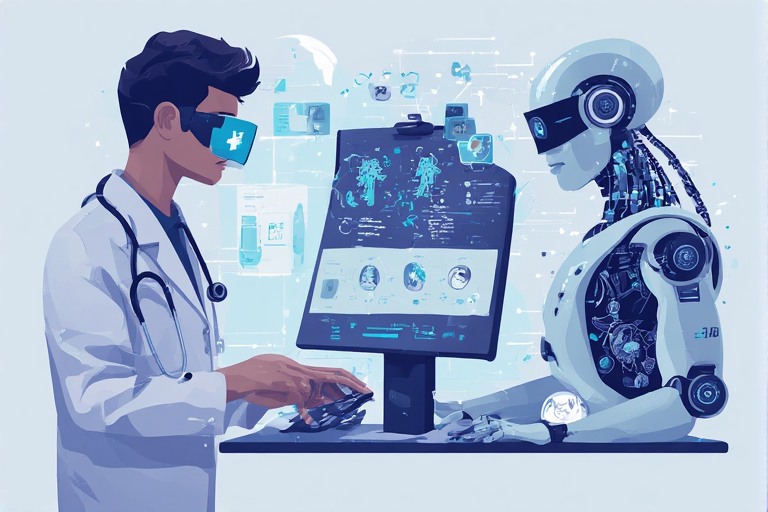
Artificial Intelligence (AI) is rapidly transforming the healthcare industry by improving how diseases are detected, diagnosed, and treated. From analyzing medical images to supporting doctors in complex decision-making, AI is helping make healthcare faster, more accurate, and more accessible.
Early Disease Detection with AI
One of the most impactful uses of AI in healthcare is early disease detection. AI systems can analyze large volumes of medical data—such as scans, lab results, and patient histories—to identify patterns that may be missed by the human eye.
For example, AI-powered imaging tools can detect early signs of conditions like cancer, diabetes complications, and heart disease. By spotting abnormalities at an earlier stage, patients can receive treatment sooner, which often leads to better outcomes and higher survival rates.
AI also plays a role in predictive analytics. By studying risk factors and lifestyle data, it can help identify individuals who are more likely to develop certain diseases in the future, enabling preventive care before symptoms even appear.
Supporting Medical Decision-Making
AI is not replacing doctors, but it is becoming a powerful assistant in clinical decision-making. Physicians often deal with complex cases that involve large amounts of data. AI tools help organize and interpret this information quickly.
Clinical decision support systems can suggest possible diagnoses, recommend tests, and even propose treatment options based on evidence from thousands of similar cases. This reduces uncertainty and helps doctors make more informed choices.
In emergency situations, AI can prioritize patient cases based on severity, ensuring that critical patients receive immediate attention.
Personalized Treatment Plans
Another major advancement is AI-driven personalized medicine. Instead of using a one-size-fits-all approach, AI helps tailor treatments to individual patients.
By analyzing genetic information, medical history, and lifestyle factors, AI can recommend treatments that are more likely to work for a specific person. This is especially important in areas like cancer treatment, where personalized therapy can significantly improve effectiveness.
Improving Efficiency in Healthcare Systems
Beyond diagnosis and treatment, AI also improves the overall efficiency of healthcare systems. Hospitals use AI to manage patient records, schedule appointments, and optimize resource allocation.
This reduces administrative workload for medical staff, allowing them to focus more on patient care. It also helps reduce waiting times and improves the overall patient experience.
Challenges and Ethical Considerations
Despite its benefits, AI in healthcare comes with challenges. Data privacy, security, and ethical concerns must be carefully addressed. Medical decisions supported by AI must always be transparent and explainable so that doctors and patients can trust the results.
There is also a need for strict regulation to ensure AI systems are safe, accurate, and unbiased.
Conclusion
AI is revolutionizing healthcare by enabling early disease detection, improving medical decision-making, and supporting personalized treatment. While it is not a replacement for healthcare professionals, it acts as a powerful tool that enhances their capabilities.
As technology continues to evolve, AI is expected to play an even greater role in creating a more efficient, accurate, and patient-centered healthcare system.