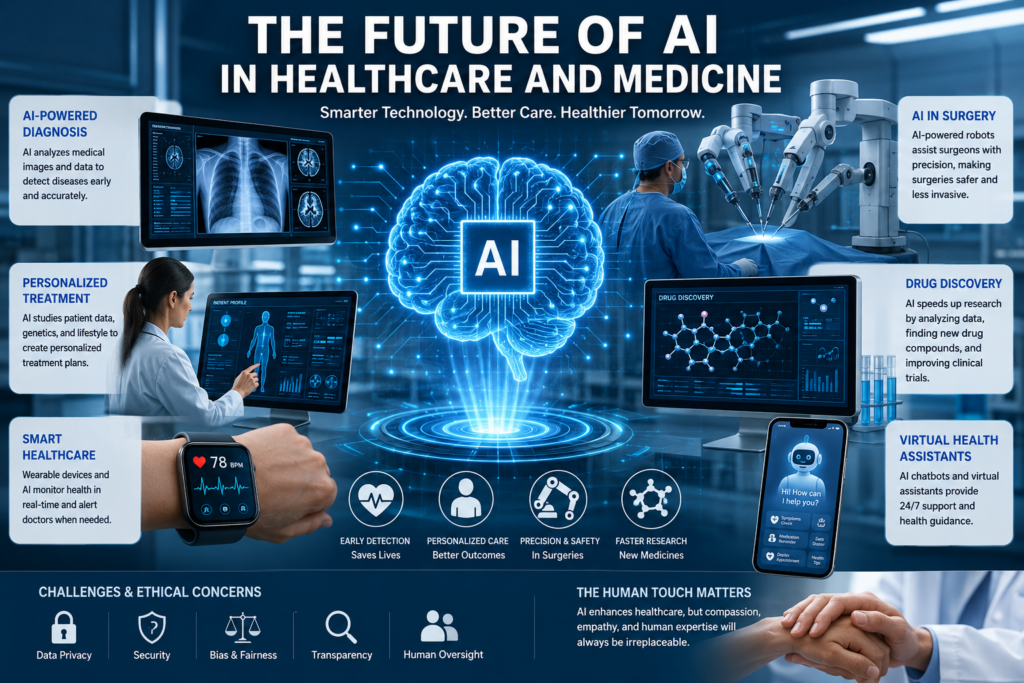
Artificial Intelligence is transforming healthcare faster than almost any other industry. From early disease detection to robotic surgeries, AI is helping doctors provide faster, smarter, and more accurate medical care. As technology continues to evolve, the future of AI in healthcare and medicine looks increasingly promising for patients, hospitals, and researchers around the world.
AI-Powered Diagnosis and Early Detection
One of the biggest advantages of AI in medicine is its ability to analyze massive amounts of medical data quickly. AI systems can detect patterns in X-rays, MRIs, blood tests, and other diagnostic reports with remarkable accuracy. In many cases, AI tools help doctors identify diseases such as cancer, diabetes, and heart conditions earlier than traditional methods.
Future AI systems are expected to become even more advanced by predicting illnesses before symptoms appear. This could lead to preventive healthcare becoming more effective and affordable for millions of people.
Personalized Treatment and Smart Healthcare
AI is also changing how treatments are designed for individual patients. Instead of using a “one-size-fits-all” approach, AI can study a patient’s medical history, genetics, and lifestyle to recommend personalized treatment plans.
In the future, smart healthcare systems may automatically monitor patients through wearable devices and alert doctors if health risks are detected. Virtual health assistants powered by AI could also provide 24/7 medical guidance, helping reduce hospital visits and improving patient care.
Robotics and AI in Surgery
Robotic surgery supported by AI is already improving precision in operating rooms. AI-assisted robots can help surgeons perform complex procedures with greater accuracy and less risk. This often leads to smaller incisions, faster recovery times, and reduced pain for patients.
As AI technology develops further, robotic systems may become capable of assisting in remote surgeries, allowing expert doctors to operate on patients located in different parts of the world.
Drug Discovery and Medical Research
Developing new medicines traditionally takes years of research and billions of dollars. AI is speeding up this process by analyzing scientific data much faster than humans can. Researchers use AI to identify potential drug compounds, predict treatment effectiveness, and improve clinical trials.
During global health emergencies, AI can play a major role in tracking disease outbreaks and helping scientists create vaccines more quickly. This could dramatically improve the world’s ability to respond to future pandemics.
Challenges and Ethical Concerns
Despite its benefits, AI in healthcare also faces important challenges. Data privacy, cybersecurity, and ethical concerns remain major issues. Medical AI systems must be carefully tested to ensure accuracy and fairness, since incorrect predictions could affect patient safety.
There is also concern that excessive reliance on AI could reduce human interaction in healthcare. Doctors and medical professionals will continue to play a critical role in providing empathy, judgment, and emotional support that machines cannot replace.
Conclusion
The future of AI in healthcare and medicine is filled with opportunities that could revolutionize the medical world. AI has the potential to improve diagnosis, personalize treatments, accelerate research, and make healthcare more accessible for people everywhere. While challenges still exist, the combination of human expertise and artificial intelligence is likely to create a smarter, faster, and more effective healthcare system in the years ahead.