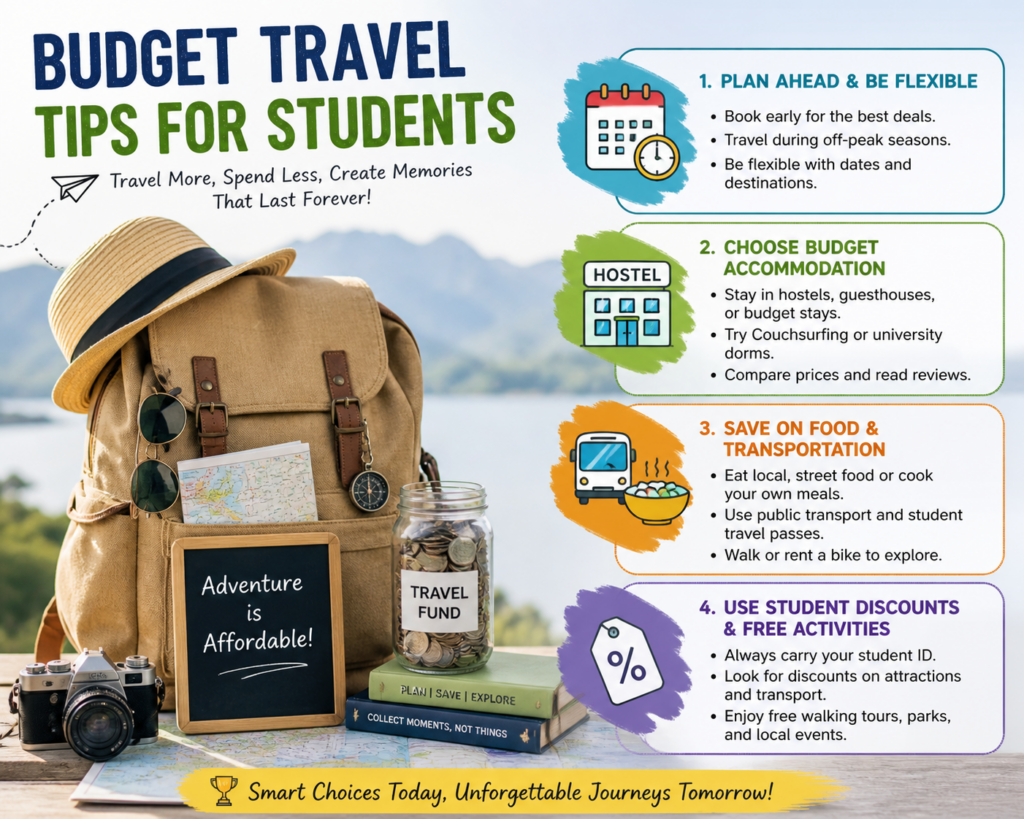
Traveling as a student can feel like a luxury, especially when you’re managing tuition fees, rent, and daily expenses. However, exploring new places doesn’t have to drain your bank account. With smart planning, flexibility, and a few insider tricks, students can travel affordably while still enjoying meaningful experiences. Here’s a practical guide to help you make the most of your adventures without overspending.
Plan Ahead and Be Flexible
One of the easiest ways to save money while traveling is to plan early. Booking flights and accommodations in advance often gives you access to lower prices and better options. Many airlines and travel platforms offer discounts for early bookings, especially during off-peak seasons.
Flexibility is just as important. If you’re open to traveling on weekdays instead of weekends, or choosing less popular destinations, you can significantly reduce costs. Use fare comparison websites and set price alerts to grab the best deals. Traveling during shoulder seasons—just before or after peak tourist times—can also help you avoid crowds and high prices.
Choose Budget-Friendly Accommodation
Accommodation is usually one of the biggest expenses, but students have plenty of affordable options. Hostels are a popular choice, offering shared rooms at low rates along with opportunities to meet fellow travelers. Many hostels also provide free amenities like Wi-Fi, breakfast, and guided tours.
If you prefer more privacy, consider budget hotels, guesthouses, or short-term rentals. Platforms that connect travelers with locals can sometimes offer cheaper alternatives to traditional hotels. Couchsurfing is another option where you can stay with hosts for free, though it’s important to check reviews and prioritize safety.
Additionally, some universities offer dorm stays during holidays, which can be both affordable and convenient for student travelers.
Save on Food and Transportation
Food and transportation can quickly add up if not managed wisely. Instead of dining at expensive restaurants, try local street food or cook your own meals if your accommodation has a kitchen. Visiting local markets is a great way to experience culture while saving money.
For transportation, use public transit whenever possible. Buses, trains, and metro systems are often much cheaper than taxis or ride-sharing services. Many cities offer student discounts or travel passes that can further reduce costs.
If you’re traveling between cities or countries, consider overnight buses or trains. Not only do they save you money on accommodation, but they also maximize your time. Walking or renting a bicycle is another budget-friendly way to explore a destination while staying active.
Take Advantage of Student Discounts and Free Activities
Being a student comes with perks—use them! Always carry your student ID, as many attractions, museums, and transportation services offer discounts. International student cards can also provide access to exclusive deals worldwide.
Look for free activities in your destination. Many cities offer free walking tours, public parks, cultural events, and museum days with no entry fees. Research ahead of time to find out what’s available during your visit.
You can also save by creating a daily budget and tracking your expenses. This helps you avoid overspending and ensures that your money lasts throughout the trip. Travel apps can assist in managing your budget and finding deals on the go.
Conclusion
Traveling as a student doesn’t have to be expensive or stressful. With careful planning, smart choices, and a willingness to adapt, you can explore the world without breaking your budget. Prioritize experiences over luxury, take advantage of discounts, and embrace simple yet meaningful ways of traveling. The memories and lessons gained from budget travel often turn out to be far more valuable than costly trips. By being resourceful and mindful of your spending, you can make your travel dreams a reality—even on a student budget.