

🌟 Introduction: The New Era of AI-Powered Learning
Education has always evolved with technology, from digital classrooms and online courses to interactive learning platforms. Today, Artificial Intelligence (AI) is becoming one of the most powerful tools transforming how students learn and how teachers teach.
In 2026, AI is helping create more personalized, accessible, and engaging learning experiences. Instead of using the same teaching method for every student, AI enables education systems to understand individual learning needs and provide customized support.
From AI tutors 🤖, personalized education 🎯, and smart classrooms 🏫 to automated assessments and intelligent learning platforms, artificial intelligence is creating a new future for education.
🤖 1. AI Tutors: Personalized Learning Assistants
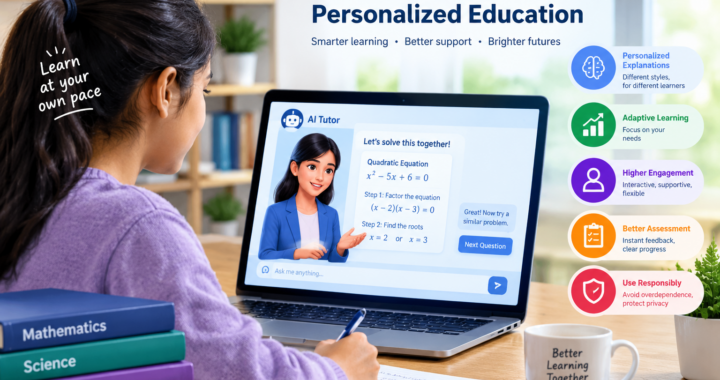
One of the biggest innovations in education is the rise of AI-powered tutors. These digital assistants can provide students with instant guidance, explanations, and practice materials anytime and anywhere.
Traditional classrooms often have limited time for individual attention. AI tutors help bridge this gap by offering personalized support based on each student’s learning speed and ability.
Benefits of AI Tutors:
✅ Instant answers to questions
✅ Personalized explanations
✅ 24/7 learning support
✅ Additional practice exercises
✅ Assistance with difficult concepts
For example, a student struggling with mathematics can receive step-by-step explanations, while another student who learns quickly can explore advanced topics.
AI tutors act as learning companions that support both students and teachers.
🎯 2. Personalized Education: Learning Based on Individual Needs
Every student learns differently. Some understand concepts quickly, while others need additional practice and guidance.
AI helps create personalized learning experiences by analyzing:
- 📊 Learning progress
- 📝 Test performance
- ⏳ Study patterns
- 🎯 Individual strengths and weaknesses
Using this information, AI systems can recommend customized lessons and learning activities.
How Personalized Learning Works:
- AI collects learning data.
- The system identifies areas where students need help.
- Customized content is provided.
- Progress is continuously monitored.
- Learning strategies are adjusted automatically.
This approach helps students learn at their own pace and improves engagement.
🏫 3. Smart Classrooms: The Future of Modern Education
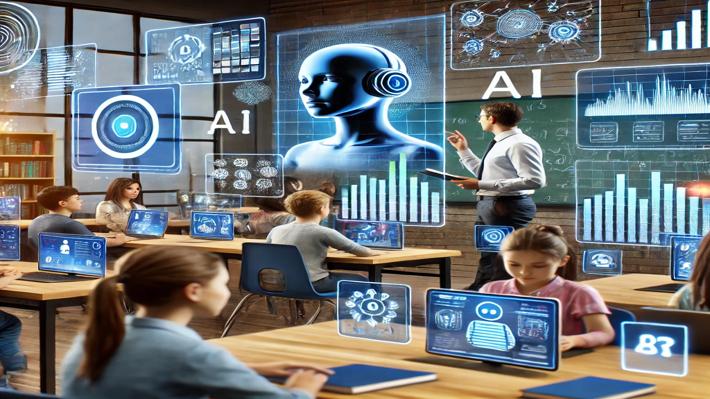
Smart classrooms combine AI, digital tools, and connected technology to create interactive learning environments.
These classrooms use technology to make lessons more engaging and efficient.
Features of Smart Classrooms:
🌐 Digital learning platforms
🤖 AI teaching assistants
📱 Interactive educational applications
📊 Real-time performance tracking
🎥 Virtual and augmented reality learning experiences
Teachers can use AI tools to identify student challenges and improve teaching strategies.
👩🏫 4. How AI Helps Teachers
AI is not replacing teachers—it is helping them become more effective.
Teachers spend significant time on administrative tasks such as grading assignments, preparing materials, and tracking student performance.
AI can assist by:
✔ Automating grading processes
✔ Creating lesson plans
✔ Generating educational resources
✔ Analyzing student progress
✔ Providing teaching recommendations
With AI handling repetitive tasks, teachers can focus more on mentoring, creativity, and student interaction.
🌍 5. Making Education More Accessible
One of the greatest benefits of AI in education is improving access to learning.
Students around the world can benefit from AI-powered tools regardless of location or resources.
AI can support:
🌎 Remote learning
🗣️ Language translation
♿ Accessibility tools for students with disabilities
📚 Affordable learning resources
For students who may not have access to expert teachers, AI can provide valuable educational assistance.
🧠 6. AI and Skill-Based Learning
The future of education is moving beyond memorization toward developing practical skills.
AI can help students build skills such as:
💻 Digital literacy
🧩 Problem-solving
🎨 Creativity
📊 Data analysis
🤝 Collaboration
AI-powered platforms can recommend courses and projects based on students’ interests and career goals.
⚠️ 7. Challenges of AI in Education
Although AI offers many advantages, there are important challenges to consider.
Data Privacy
AI learning platforms collect student information, making data protection essential.
Technology Access
Not every student has equal access to devices and internet connectivity.
Overdependence on AI
Students should use AI as a learning support tool rather than a replacement for critical thinking.
Teacher Training
Educators need proper training to use AI effectively in classrooms.
Responsible implementation is necessary to ensure AI improves education for everyone.
🔮 8. The Future of AI in Education
The future of education will likely combine human teaching expertise with AI-powered technology.
Future developments may include:
🚀 Advanced AI learning companions
🌐 Virtual AI classrooms
🧠 Emotion-aware learning systems
📖 Fully personalized education pathways
🎓 AI career guidance platforms
AI will continue transforming education by making learning more flexible, personalized, and accessible.
🌈 Conclusion: Building a Smarter Learning Future
Artificial Intelligence is changing education by creating new ways for students to learn and teachers to teach. AI tutors, personalized learning systems, and smart classrooms are making education more interactive and effective.
However, the goal of AI in education should not be replacing human teachers but enhancing human potential. The combination of AI technology and human creativity can create a learning environment where every student receives better opportunities to succeed.
The future of education is not just digital—it is intelligent, personalized, and powered by collaboration between humans and artificial intelligence. 🤖📚✨