Artificial intelligence has moved from being a futuristic concept to becoming an important part of modern digital life. From virtual assistants and automated customer support to predictive analytics and intelligent software, AI is increasingly helping individuals and organizations work smarter, faster, and more efficiently.
The growing ecosystem of AIServices represents one of the most important developments in today’s technology landscape. AI services provide businesses, developers, educators, researchers, and everyday users with access to powerful artificial intelligence capabilities without requiring everyone to build sophisticated AI systems from scratch.
Whether it involves generating content, analyzing data, recognizing images, translating languages, automating repetitive tasks, detecting patterns, or assisting with decision-making, AIServices can support a wide range of digital activities. 🌐✨
As AI technology continues to evolve, understanding what AI services are, how they work, where they can be applied, and what challenges they introduce has become increasingly valuable.
Understanding AIServices 🤖
AIServices can broadly be described as technology-based solutions that provide artificial intelligence capabilities through software platforms, applications, APIs, cloud environments, or specialized tools.
Traditional software generally follows instructions that developers explicitly program. AI-powered systems can go further by processing large quantities of information, identifying patterns, generating predictions, understanding natural language, and adapting their responses based on data and models.
An AIServices platform may provide one specific capability or combine multiple AI technologies into a larger solution. For example, one service might specialize in text generation, while another could focus on image recognition, speech processing, recommendation systems, or predictive analytics.
The availability of cloud-based AI services has also changed how organizations approach artificial intelligence. Instead of investing in extensive computing infrastructure and building every component internally, companies can often access AI capabilities through online platforms and APIs. ☁️💻
This accessibility has helped make artificial intelligence available to organizations of many different sizes.
A small company can potentially use AI-powered customer support without maintaining a large technology department. A developer can integrate language or vision capabilities into an application. A researcher can use machine learning tools to explore complex datasets. Students can experiment with AI concepts through accessible learning platforms.
In this sense, AIServices can act as a bridge between advanced artificial intelligence research and practical everyday applications.
The Technology Behind Modern AI Services 🧠
Modern AIServices rely on several technologies working together. Machine learning is one of the most important foundations.
Machine learning allows systems to learn patterns from data and use those patterns to make predictions or generate useful outputs. Instead of programming every possible scenario manually, developers train models using examples.
Deep learning is a specialized area of machine learning that uses neural networks containing multiple layers. These systems can process complex patterns and have contributed significantly to progress in computer vision, speech recognition, language processing, and generative AI.
Natural language processing, commonly known as NLP, enables computers to work with human language. NLP technologies support applications such as translation, sentiment analysis, document processing, chatbots, summarization, and intelligent search. 🗣️📚
Computer vision focuses on helping machines interpret visual information. AI systems can analyze photographs, videos, documents, medical images, industrial images, and other visual data depending on their design and purpose.
Speech technologies provide another major category. Speech recognition can convert spoken language into text, while speech synthesis can generate spoken responses from text.
Generative AI has added another important dimension to AIServices. Generative systems can produce text, images, audio, software code, and other forms of content based on user instructions and contextual information.
Together, these technologies create a broad ecosystem capable of supporting increasingly sophisticated digital experiences.
AIServices for Business Transformation 💼🚀
Businesses are among the largest adopters of AI services because artificial intelligence can support multiple areas of organizational activity.
Customer service is one of the most visible applications. AI-powered assistants can respond to common questions, help users locate information, summarize conversations, and route complex issues to human representatives.
This does not necessarily mean replacing human employees. In many cases, AI can handle repetitive interactions while human teams focus on situations requiring empathy, judgment, creativity, or specialized expertise.
Marketing is another area where AI services can provide valuable assistance. Organizations can analyze customer behavior, identify patterns, personalize campaigns, generate drafts, and explore different messaging strategies.
AI-powered analytics can also help businesses understand large datasets. Instead of manually examining thousands or millions of records, organizations can use machine learning systems to identify trends, anomalies, and relationships.
Supply-chain management can benefit from predictive systems as well. AI can analyze historical information and other relevant signals to support forecasting, inventory planning, and operational decision-making.
Human resources departments may use AI-assisted tools for administrative workflows, employee engagement analysis, skills mapping, or internal knowledge management. These applications require careful governance because employment-related decisions can have significant consequences.
Financial organizations can use AI for fraud detection, risk analysis, document processing, customer support, and forecasting.
The potential value of AIServices comes from their ability to augment human capabilities across many departments rather than being limited to one particular industry.
AI Services in Customer Experience ❤️🤖
Customer expectations have changed dramatically in the digital era. People often expect quick responses, easy navigation, personalized experiences, and access to information across multiple channels.
AIServices can help organizations respond to these expectations.
Intelligent chat systems can provide assistance at any hour. Recommendation systems can suggest products, articles, videos, or services based on available information. Automated document processing can accelerate workflows that previously required manual data entry.
AI can also help analyze customer feedback. Thousands of reviews, support conversations, surveys, and messages can contain valuable information. Natural language processing can help organizations identify recurring themes, frequently reported problems, or general sentiment.
However, successful AI-powered customer experiences require thoughtful design. Customers should understand when they are interacting with an automated system, and organizations should provide clear paths to human assistance when necessary.
The best customer-facing AI solutions are often not simply about automation. They are about combining technological efficiency with human-centered service. 🌟
AIServices and Data Analytics 📊
Data is one of the most important resources in modern organizations.
Businesses collect information from websites, applications, transactions, sensors, customer interactions, operations, and many other sources. However, having data does not automatically create useful knowledge.
AI services can help transform large datasets into actionable insights.
Machine learning algorithms can identify patterns that may be difficult to detect manually. Predictive analytics can estimate possible future outcomes based on historical information. Classification systems can organize information into meaningful categories.
An organization might use AI to identify unusual transactions, predict demand, understand customer behavior, detect equipment problems, or analyze operational performance.
Data visualization tools can then present results in dashboards that help decision-makers understand important trends.
Yet data quality remains critical. AI models trained on incomplete, inaccurate, outdated, or poorly structured information can produce unreliable results.
For this reason, effective AIServices strategies require attention to the entire data lifecycle, including collection, preparation, storage, governance, analysis, and responsible use.
AIServices for Software Development 💻
Artificial intelligence is increasingly becoming part of the software development process.
Developers can use AI-assisted tools to generate code suggestions, explain unfamiliar programming concepts, identify potential bugs, create documentation, write tests, and explore implementation approaches.
AI can also support software teams by summarizing technical documents and helping developers navigate large codebases.
This does not eliminate the importance of programming knowledge. Developers still need to understand architecture, security, testing, performance, maintainability, and business requirements.
AI-generated code can contain mistakes, inefficient approaches, security vulnerabilities, or assumptions that do not fit a particular project.
Therefore, responsible developers treat AI assistance as a productivity tool rather than an unquestionable source of truth. 🔍
The most effective approach is often collaborative: humans define requirements and evaluate solutions while AI assists with repetitive or exploratory tasks.
As AIServices become increasingly integrated into development environments, software engineering may become more focused on system design, verification, problem-solving, and effective communication with intelligent tools.
AIServices in Education 🎓📚
Education is another area where AI services can provide significant opportunities.
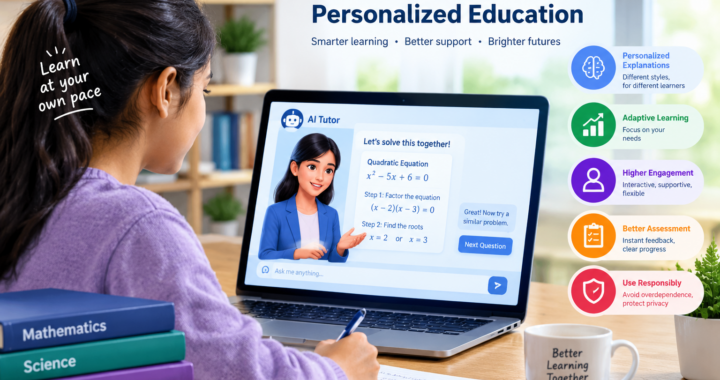
Students can use AI-powered tools to explore difficult concepts, generate practice questions, receive explanations, organize study materials, and explore alternative approaches to learning.
Teachers can use AI to assist with administrative work, create lesson resources, summarize information, and develop educational activities.
AI-powered language tools can support learners who are studying new languages by providing translation, conversation practice, grammar explanations, and vocabulary assistance.
Adaptive learning systems can potentially personalize educational experiences based on student performance. Instead of presenting identical material to everyone, intelligent systems can help identify areas where individual learners may need additional practice.
At the same time, education requires careful consideration of academic integrity.
Students should use AI as a learning aid rather than relying on it to complete assignments without understanding the underlying material. Educators and institutions need clear policies explaining appropriate and inappropriate uses.
The future of AI in education is likely to emphasize collaboration between teachers, students, and intelligent systems rather than simply replacing traditional instruction.
AI for Healthcare and Scientific Research 🧬🔬
Healthcare and scientific research represent areas where AI services can support highly complex workflows.
Researchers can use machine learning to analyze large datasets, identify patterns, organize scientific literature, and explore potential relationships between variables.
In healthcare environments, AI may assist with administrative tasks, medical imaging analysis, clinical documentation, scheduling, and research.
However, healthcare AI requires particularly strong safeguards. Medical decisions can affect human lives, so systems must be appropriately validated and used under suitable professional oversight.
AI should not automatically be treated as a substitute for qualified medical professionals.
Scientific research also benefits from AI’s ability to process information at scale. Modern research can generate enormous quantities of experimental, genomic, environmental, or observational data. Machine learning can help researchers identify relationships worth investigating further.
The combination of human expertise and computational intelligence could contribute to advances across many scientific disciplines. 🔬✨
AIServices for Content Creation ✍️🎨
Generative AI has significantly changed the digital content landscape.
AIServices can help users create drafts for articles, marketing materials, product descriptions, social media posts, presentations, summaries, scripts, and other forms of written communication.
Image-generation systems can assist designers and creative professionals with concepts, illustrations, visual exploration, and prototypes.
Audio and video technologies are also developing rapidly, creating new possibilities for media production.
For content creators, AI can reduce the time required for repetitive tasks. Instead of beginning every project from a blank page, creators can use AI to generate initial ideas and then refine them with human judgment.
Authenticity remains important, however. High-quality content should be reviewed for accuracy, originality, context, and audience suitability.
The strongest creative workflows often combine AI speed with human creativity. 🎨🤝🤖
AI Automation and Productivity ⚙️
Automation is one of the most practical benefits of AIServices.
Many organizations have repetitive tasks that consume significant amounts of employee time. Examples include sorting documents, extracting information, responding to routine inquiries, creating summaries, organizing records, and moving information between systems.
AI-powered automation can help streamline these workflows.
For example, a system could process incoming documents, identify relevant information, classify each document, and send it to the appropriate workflow.
AI can also summarize long meetings or documents, helping employees quickly understand key points.
Personal productivity tools can assist with scheduling, note organization, research, writing, and task management.
The goal should not simply be to automate everything. Organizations should identify workflows where automation creates measurable value while maintaining appropriate human oversight.
Good automation makes people more productive without sacrificing quality or accountability.
Cloud-Based AIServices ☁️
Cloud computing has played a major role in expanding access to artificial intelligence.
Training and operating advanced AI systems can require substantial computing resources. Cloud platforms allow organizations to access scalable infrastructure without necessarily purchasing and maintaining all hardware themselves.
Cloud-based AIServices may include machine learning platforms, language processing APIs, vision services, speech recognition, data analytics, model deployment environments, and development tools.
Scalability is a major advantage. A company may start with a small AI application and expand its usage as demand grows.
Cloud services can also make AI development more accessible to smaller organizations and independent developers.
Nevertheless, businesses must evaluate issues such as cost, data governance, vendor dependence, compliance requirements, reliability, and security before selecting a cloud-based AI solution.
AI Security and Privacy 🔐
The expansion of AIServices also creates important security and privacy considerations.
AI systems frequently process information, and organizations need to understand what data is collected, where it is stored, how it is processed, and who can access it.
Sensitive information should receive appropriate protection.
Organizations should also consider access controls, authentication, encryption, monitoring, logging, and incident response.
Another important issue is prompt and input security. AI applications that accept information from users or external sources can potentially encounter malicious or misleading inputs.
Developers need to design systems with security principles in mind from the beginning rather than treating security as an afterthought.
Privacy should also be incorporated into AI governance. Users deserve transparency about how their information is handled.
Trust is essential for long-term AI adoption. Without appropriate privacy and security practices, even technically impressive AIServices can create serious organizational risks.
Responsible and Ethical AI 🌍
Technology does not operate independently of society.
AIServices can influence decisions, communication, employment, education, financial services, healthcare, and many other areas. As a result, responsible AI development is becoming increasingly important.
One major concern is bias.
AI models learn patterns from data. If training data contains problematic biases, the resulting system may reproduce or amplify them.
Transparency is another important principle. Users and organizations should understand when AI is being used and, where appropriate, how important decisions are made.
Human oversight is particularly important for high-impact applications.
Organizations should establish governance processes covering model evaluation, monitoring, documentation, accountability, and risk management.
Responsible AI is not simply a technical challenge. It involves business leaders, developers, policymakers, researchers, educators, and users.
A sustainable AI ecosystem requires innovation alongside responsibility. 🌱🤖
Choosing the Right AIServices 🧩
Organizations have many AI options available, so selecting the right solution requires careful evaluation.
The first step is to identify the actual business problem.
Instead of adopting AI simply because it is popular, organizations should ask what specific outcome they want to improve.
Possible goals include reducing processing time, improving customer support, increasing forecasting accuracy, assisting employees, improving search, or creating new digital products.
Organizations should then evaluate potential services according to factors such as performance, scalability, integration capabilities, pricing, security, reliability, documentation, and support.
Ease of integration can be particularly important. An impressive AI model may provide limited value if it cannot work effectively with existing systems.
Organizations should also consider whether they need a specialized service or a broader AI platform.
Testing with a small pilot project can help teams understand the practical benefits and limitations before making larger investments.
Building an AI-Ready Organization 🚀
Technology alone does not guarantee successful AI adoption.
Organizations also need people, processes, and a culture that supports experimentation and responsible implementation.
Employees may need training to understand how AI tools work and how to use them effectively.
Leadership should establish clear expectations around acceptable AI usage.
Data management practices should be strengthened because AI systems depend heavily on information quality.
Organizations can also create cross-functional AI teams involving technology professionals, business specialists, legal experts, security teams, and domain experts.
This approach helps ensure that AI projects address real business requirements rather than becoming isolated technical experiments.
An AI-ready organization is one that understands both the capabilities and limitations of artificial intelligence.
The Future of AIServices 🔮
The future of AIServices is likely to involve deeper integration into everyday software.
Rather than interacting with AI only through standalone applications, users may increasingly encounter intelligent capabilities embedded inside productivity platforms, enterprise software, websites, mobile applications, vehicles, devices, and digital services.
AI agents may become capable of completing sequences of tasks rather than simply responding to individual questions.
Multimodal AI is another important direction. Systems increasingly combine text, images, audio, video, and other forms of information.
This could enable more natural interactions between humans and software.
Smaller and more efficient AI models may also expand the range of applications that can operate directly on personal devices.
Meanwhile, organizations will continue developing governance systems to manage AI risks and responsibilities.
The future will likely not be defined by AI alone. Instead, it will be shaped by the interaction between intelligent technology and human decision-making.
AIServices and the Changing Workplace 👩💻🤖
AI is changing how many professionals approach their work.
Some repetitive tasks may become automated, while new responsibilities emerge around managing, evaluating, and supervising AI systems.
Employees who learn how to collaborate effectively with AI may gain new productivity advantages.
This does not necessarily mean that every job will disappear. Work itself can change as technology takes over particular tasks.
For example, a marketing professional might spend less time creating first drafts and more time developing strategy. A developer might spend less time writing repetitive code and more time designing architecture. A researcher might spend less time organizing information and more time interpreting findings.
The future workplace may therefore emphasize creativity, critical thinking, communication, adaptability, and domain expertise alongside technical skills.
Learning About AI Services 📖
Anyone interested in AIServices can begin learning without becoming an advanced AI researcher.
A good starting point is understanding basic concepts such as machine learning, neural networks, natural language processing, generative AI, datasets, APIs, and automation.
Hands-on experimentation is valuable.
Learners can explore simple AI applications, build small projects, analyze datasets, experiment with APIs, or create basic automation workflows.
Programming knowledge, especially Python, can be useful for people interested in technical AI development.
However, non-programmers can also learn how AI services work and how to use them responsibly.
The most important skill is not memorizing every AI tool. Technology changes quickly.
Instead, learners should develop the ability to understand problems, evaluate AI outputs, identify limitations, protect sensitive information, and choose appropriate tools.
Challenges Facing AIServices ⚠️
Despite their potential, AI services have limitations.
AI systems can generate inaccurate information. They can misunderstand context, produce inconsistent outputs, or make predictions that do not generalize to new situations.
Costs can also become significant at scale.
Organizations may become dependent on external AI providers, creating concerns about availability, pricing changes, portability, and vendor lock-in.
Data quality remains another challenge.
There are also legal, ethical, privacy, and regulatory questions surrounding AI adoption.
For these reasons, organizations should avoid treating AI as a magical solution to every problem.
Successful AI implementation requires realistic expectations, testing, monitoring, and continuous improvement.
Why AIServices Matter 🌟
The importance of AIServices comes from their ability to make advanced computational capabilities more accessible.
Artificial intelligence once required highly specialized research teams and expensive infrastructure. Today, many AI capabilities can be accessed through platforms, applications, and cloud services.
This democratization creates opportunities for businesses, students, developers, creators, researchers, and entrepreneurs.
A small team can experiment with technologies that previously required substantial resources.
An educator can explore intelligent learning experiences.
A developer can add language or vision capabilities to an application.
A business can automate repetitive workflows.
A creative professional can explore new forms of digital expression.
These possibilities demonstrate why AIServices have become an important part of the modern technology ecosystem.
Conclusion: Embracing the AIServices Era 🚀🤖
AIServices represent a major step in the evolution of digital technology.
From business automation and customer support to education, software development, analytics, content creation, research, and productivity, artificial intelligence is becoming integrated into an expanding range of activities.
The most valuable approach is not simply to adopt AI as quickly as possible. Instead, individuals and organizations should learn how these technologies work, identify meaningful use cases, evaluate risks, protect data, and maintain appropriate human oversight.
The future of AIServices will likely bring increasingly capable, accessible, multimodal, and personalized artificial intelligence.
Yet the ultimate value of these technologies will depend on how people use them.
When combined with human creativity, expertise, judgment, and responsibility, AIServices can become powerful tools for solving problems and creating new opportunities. 🌍✨
The AI era is already here—and learning how to work with intelligent technology may become one of the most valuable digital skills of the coming years. 🤖💡🚀