Artificial intelligence (AI) is rapidly changing the way businesses operate, communicate, and make decisions. From automated customer support to advanced data analytics, AI services are helping organizations improve productivity while creating smarter digital experiences. 🚀
As companies generate more data and compete in increasingly digital markets, traditional approaches alone are often not enough. AI-powered solutions can analyze information, automate repetitive processes, and provide useful insights that help teams work more efficiently.
🧠 What Are AI Services?
AI services are technology solutions that use artificial intelligence to perform tasks that traditionally require human intelligence. These tasks can include understanding language, recognizing images, analyzing data, making predictions, and automating decisions.
Modern AI services can be delivered through cloud platforms, software applications, APIs, enterprise systems, and specialized business tools. This makes AI accessible not only to large corporations but also to startups, educational institutions, healthcare organizations, retailers, and small businesses.
The growing availability of AI tools means organizations can adopt intelligent technologies without necessarily building complex AI infrastructure from scratch. 💡
⚙️ Business Automation With AI
One of the biggest advantages of AI services is automation. Businesses often spend significant amounts of time handling repetitive activities such as data entry, document processing, scheduling, customer inquiries, and reporting.
AI-powered automation can help reduce manual workloads and allow employees to focus on more strategic responsibilities. For example, an AI system can categorize incoming customer requests, extract information from documents, or generate routine reports.


Automation can also operate continuously, helping organizations maintain consistent workflows and respond quickly to routine requests. ⏱️
💬 AI Chatbots and Customer Support
Customer service is another major area where AI services are making an impact. AI-powered chatbots can answer frequently asked questions, provide basic guidance, and direct customers toward appropriate resources.
Natural language processing allows modern AI systems to understand conversational questions and generate useful responses. Businesses can use these technologies across websites, mobile applications, and digital communication channels.
A well-designed AI support system does not necessarily replace human employees. Instead, it can handle common questions while allowing human agents to concentrate on complicated cases that require judgment and empathy. 🤝
📊 AI for Data Analytics
Every organization produces data. Sales records, website activity, customer interactions, inventory information, and operational metrics can provide valuable insights—but analyzing huge volumes of information manually can be challenging.
AI services can process large datasets and identify patterns that may otherwise be difficult to notice. Machine learning models can also assist with forecasting, classification, recommendation systems, and anomaly detection.


For businesses, these capabilities can support more informed decision-making. 📈 Instead of relying entirely on historical reports, organizations can combine AI-generated insights with human expertise to understand potential trends and opportunities.
🔐 AI and Cybersecurity
Digital security has become increasingly important as businesses move more operations online. AI services can assist security teams by monitoring activity, identifying unusual patterns, and helping prioritize potential threats.
Machine learning systems can analyze large quantities of security data and recognize behaviors that may indicate suspicious activity. This can help security professionals investigate incidents more efficiently.
However, AI should be considered part of a broader cybersecurity strategy. Strong access controls, encryption, employee training, software updates, and human oversight remain essential. 🛡️
🎨 AI for Content and Creative Work
AI services are also transforming creative workflows. Businesses can use AI tools to brainstorm ideas, summarize information, generate drafts, analyze audiences, and support marketing campaigns.
Content teams can use AI to accelerate repetitive stages of their workflow while retaining human control over strategy, originality, accuracy, and brand voice.


The most effective approach is often a combination of artificial intelligence and human creativity. AI can provide speed and scale, while people contribute context, judgment, originality, and emotional understanding. ✨
🏥 AI Services Across Different Industries
AI is not limited to one business sector. Its applications are expanding across industries.
In healthcare, AI can support medical research, administrative workflows, medical imaging analysis, and patient-service systems. In finance, AI can assist with fraud detection, risk analysis, and customer service.
Retail companies can use AI for recommendations, inventory forecasting, and customer insights. Manufacturing organizations can apply machine learning to predictive maintenance and quality control.
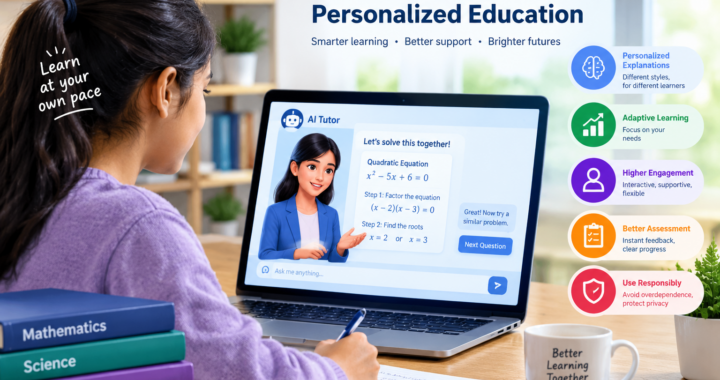
Education providers can use AI-powered tools to personalize learning experiences, support administrative processes, and help educators analyze student performance.
The specific benefits depend on the organization’s goals, data quality, infrastructure, and responsible-use practices. 🌍
🚀 The Future of AI Services
The future of AI services is likely to involve increasingly integrated and specialized intelligent systems. AI agents, multimodal models, predictive analytics, and automated workflows are creating new possibilities for businesses.
Organizations will increasingly need to consider not only what AI can do but also how it should be used responsibly. Privacy, security, transparency, accuracy, bias management, and human oversight will remain important considerations.
Companies that approach AI strategically can use these technologies to improve efficiency, enhance customer experiences, and discover new opportunities.
🌟 Final Thoughts
AI services are becoming an important part of modern digital transformation. From automation and customer support to analytics, cybersecurity, and creative work, artificial intelligence can help organizations solve problems more efficiently.
The goal should not simply be to adopt AI because it is popular. Instead, businesses should identify meaningful problems, select appropriate technologies, protect their data, and maintain human oversight.
With the right strategy, AI can become more than a technological experiment—it can become a practical tool for building smarter, faster, and more adaptable organizations. 🤖💡🚀