🌟 Introduction
Artificial Intelligence (AI) has become one of the most significant technological advancements of the modern era. Organizations across industries are embracing AI services to automate repetitive tasks, enhance customer experiences, improve decision-making, and drive innovation. From intelligent virtual assistants and predictive analytics to computer vision and natural language processing, AI services are helping businesses operate more efficiently while creating new opportunities for growth.
Whether you’re a startup, a multinational corporation, or an individual entrepreneur, AI services offer practical solutions that can streamline operations, reduce costs, and unlock valuable insights from data. Cloud-based AI platforms have made advanced technologies more accessible than ever, enabling organizations of all sizes to integrate AI into their workflows without requiring extensive in-house infrastructure.
This comprehensive guide explores the evolution, applications, benefits, challenges, and future trends of AI services, helping you understand why they have become a cornerstone of digital transformation.
📚 Table of Contents
- 🤖 What Are AI Services?
- 📈 The Evolution of AI Services
- ☁️ Cloud-Based AI Solutions
- 💼 AI Services for Business
- 🏥 Healthcare Applications
- 🎓 AI in Education
- 🛒 Retail and E-commerce
- 🏭 Manufacturing and Industry
- 🔒 Cybersecurity and Risk Management
- 🌍 Smart Cities and Sustainability
- 🚀 Future Trends
- ❓ Frequently Asked Questions
- ✅ Conclusion
🤖 What Are AI Services?
AI services refer to software, platforms, and tools that use artificial intelligence to perform tasks such as analyzing data, recognizing speech, understanding language, generating content, detecting patterns, and automating workflows.
Common AI service categories include:
- 💬 Conversational AI and chatbots
- 📊 Predictive analytics
- 🧠 Machine learning platforms
- 🖼️ Computer vision
- 🎙️ Speech recognition
- 🌐 Natural language processing
- ✍️ Generative AI
- ☁️ AI cloud services
These services are often delivered through cloud platforms, making them accessible to organizations of all sizes.
📈 The Evolution of AI Services
Artificial intelligence has progressed from simple rule-based systems to sophisticated machine learning and deep learning models.
Key milestones include:
- 📚 Expert systems
- 🤖 Machine learning
- 🧠 Deep learning
- 🎨 Generative AI
- 🔄 Multimodal AI
- ⚡ Edge AI
Modern AI services can process text, images, audio, and video simultaneously, enabling more powerful and versatile applications.
☁️ Cloud-Based AI Solutions


Cloud AI services provide scalable infrastructure without requiring businesses to invest heavily in physical hardware.
Benefits include:
- ☁️ Scalability
- 🔒 Security features
- 💰 Reduced infrastructure costs
- 🚀 Faster deployment
- 🌎 Global accessibility
- 🔄 Automatic updates
Cloud-based AI enables businesses to experiment with intelligent applications while minimizing operational complexity.
💼 AI Services for Business
Businesses use AI services to improve productivity and customer engagement.
Applications include:
📞 Customer Support
- AI chatbots
- Virtual assistants
- Automated ticket routing
- 24/7 customer service
📈 Marketing
- Personalized recommendations
- Customer segmentation
- Campaign optimization
- Content generation
💹 Finance
- Fraud detection
- Risk analysis
- Expense forecasting
- Financial reporting
📦 Supply Chain
- Demand forecasting
- Inventory optimization
- Logistics planning
- Route optimization
🏥 Healthcare Applications


Healthcare organizations increasingly rely on AI services for:
- 🩺 Medical imaging analysis
- 🧬 Personalized medicine
- 💊 Drug discovery
- 📋 Clinical documentation
- 🧠 Predictive diagnostics
- 🩻 Disease detection
AI supports healthcare professionals by improving efficiency and providing decision-support tools, while final medical decisions remain with qualified clinicians.
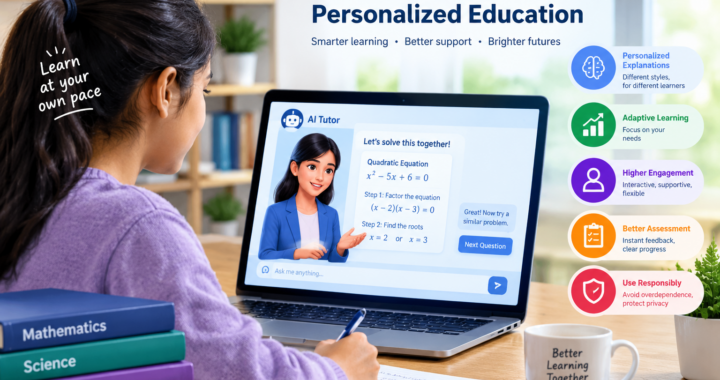
🎓 AI in Education
Educational institutions use AI to enhance learning experiences.
Examples include:
- 📚 Personalized learning
- 📝 Automated grading
- 🌐 Language translation
- 🤖 Virtual tutors
- 📊 Student performance analytics
- 🎥 Interactive learning platforms
AI helps educators tailor instruction to individual needs and provides students with additional learning resources.
🛒 Retail and E-commerce
Retailers benefit from AI services through:
- 🛍️ Personalized shopping experiences
- 📦 Inventory forecasting
- 💳 Fraud prevention
- 📈 Sales prediction
- 🤖 Customer service automation
- 🎯 Recommendation engines
These capabilities improve customer satisfaction while optimizing business operations.
🏭 Manufacturing and Industry
AI services are transforming industrial operations by enabling:
- ⚙️ Predictive maintenance
- 🤖 Robotics automation
- 🏗️ Quality inspection
- 📊 Production analytics
- 🚚 Supply chain optimization
- 🌍 Energy efficiency
Manufacturers use AI to reduce downtime, improve quality, and increase operational efficiency.
🔒 Cybersecurity and Risk Management
AI enhances cybersecurity by helping organizations:
- 🛡️ Detect unusual network activity
- 🔍 Identify potential threats
- 📊 Analyze security logs
- 🚨 Support incident response
- 🔐 Improve identity verification
AI systems can process large volumes of security data quickly, assisting security teams in prioritizing potential risks.
🌍 Smart Cities and Sustainability


Governments and municipalities are adopting AI services to improve urban infrastructure.
Applications include:
- 🚦 Traffic optimization
- 💡 Smart energy management
- 💧 Water resource monitoring
- 🌱 Environmental protection
- 🚍 Public transportation planning
- 🚨 Emergency response coordination
These initiatives can contribute to more efficient and sustainable cities.
🚀 Future Trends
The future of AI services is expected to include:
- 🤖 Autonomous AI assistants
- 🧠 More capable multimodal AI
- 📱 Edge AI on connected devices
- 🌐 AI-powered collaboration tools
- 🔬 Scientific research acceleration
- 🌍 Sustainable AI infrastructure
- 🔒 Enhanced AI governance
- ⚖️ Greater emphasis on transparency and responsible AI
Organizations that invest in AI literacy and responsible deployment will be better positioned to benefit from these developments.
❓ Frequently Asked Questions
What are AI services?
AI services are software platforms and tools that use artificial intelligence to automate tasks, analyze data, generate content, recognize patterns, and support decision-making.
Which industries use AI services?
Healthcare, finance, education, manufacturing, retail, logistics, agriculture, media, and many other sectors use AI services in various ways.
Are AI services suitable for small businesses?
Yes. Many cloud-based AI services are available through subscription models, making them accessible to startups and small businesses without requiring significant upfront investment.
Will AI replace human workers?
AI is more commonly used to automate repetitive tasks and support human decision-making. While some job roles evolve, AI also creates demand for new skills and occupations.
✅ Conclusion
AI services are reshaping the way organizations operate, innovate, and interact with customers. By combining automation, analytics, machine learning, and generative AI, these services help businesses improve efficiency, uncover valuable insights, and deliver more personalized experiences.
As AI technology continues to advance, its impact will likely expand across industries, creating new opportunities while also highlighting the importance of responsible development, transparency, and human oversight. Businesses that thoughtfully adopt AI services today will be well positioned to adapt to the evolving digital landscape and drive innovation in the years ahead.